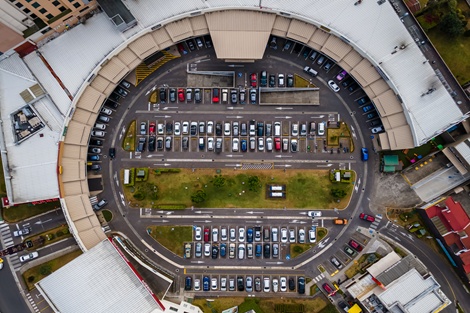
Parking Studies & Shared Parking Analysis evaluate parking demand, supply, and utilization for development projects. Traffic engineers prepare these studies to support new development, redevelopment, and adaptive reuse efforts. The analyses commonly support site plan and zoning applications.
These studies apply local land development codes, ITE Parking Generation data, and accepted shared parking methodologies. The results help justify required parking quantities, support parking reductions or variances, and facilitate development approvals.
Parking Studies
Parking Studies evaluate parking demand, supply, and operational characteristics for development projects. Traffic engineers analyze code requirements, ITE Parking Generation data, and observed parking conditions. The study documents compliance and supports parking reductions or variances.
Parking Studies commonly support site plan and zoning approvals by providing clear, defensible parking documentation.

Shared Parking Analysis
Shared Parking Analysis evaluates opportunities to reduce parking supply by accounting for different peak demands among land uses. Traffic engineers apply accepted shared parking methodologies and local code criteria. The analysis identifies parking efficiencies and supports parking reductions or variances.
This service frequently supports mixed-use developments and projects with multiple complementary uses.

Parking Variance Support
Parking Reduction and Variance Support provides technical justification for reduced parking requirements. Traffic engineers evaluate parking demand, site constraints, land use characteristics, and applicable code provisions. These analyses often build on Parking Studies or Shared Parking Analyses.
The documentation supports planning and zoning approvals and addresses agency and public review comments.

Adaptive Reuse Parking Evaluations
Adaptive Reuse Parking Evaluations assess parking demand for the conversion of existing buildings to new uses. Traffic engineers review existing site conditions, proposed land use, and applicable parking standards. Observed parking demand often supports the analysis.
These evaluations justify parking reductions or variances and support planning, zoning, and site plan approvals for adaptive reuse projects.